When life shifts, anchor yourself to what does not move.
By Erica Q. Johnson | Faith Beyond Sunday
Have you ever had one of those weeks when it seems like everything is going wrong?
You're praying. You're trying to trust God. You're doing your best to keep up with your responsibilities. But every time you think you can finally catch your breath, something else happens.
Maybe it's a problem at work, financial pressure, a difficult relationship, or news you weren't prepared to hear. Before you know it, you're lying awake at night wondering how you're going to handle everything.
And somewhere in the middle of all that, you start asking yourself, God, where are You in all of this?
I want to remind you of something today.
What you're going through right now is not your whole life.
It's a chapter. And even the hardest chapters don't get to determine how your entire story ends.
If you're struggling to trust God during difficult times, I want to share some biblical encouragement and practical ways to hold on to your faith when life feels overwhelming.
How Do You Trust God When Everything Seems to Be Going Wrong?
Trusting God during difficult times begins with remembering who God is, even when your circumstances make it difficult to see what He's doing.
You don't have to understand everything that's happening to believe that God is still faithful. You can acknowledge that life is hard, bring your concerns to Him in prayer, and rely on His Word for guidance.
I know that sounds simple. But when you're the one going through something, it doesn't always feel simple.
I know what it's like to feel overwhelmed.
For more than twenty years, I worked in healthcare leadership. There were seasons when I worked sixty, seventy, and sometimes eighty hours a week.
I was exhausted.
My schedule was full, my responsibilities kept growing, and I was constantly trying to stay ahead of everything that needed my attention.
Eventually, I experienced burnout.
What helped me begin finding my way back wasn't doing more. It was learning to slow down, spend meaningful time in God's Word, and actually apply what I was reading to my life.
That meant looking at my habits, my boundaries, and even how I managed my schedule.
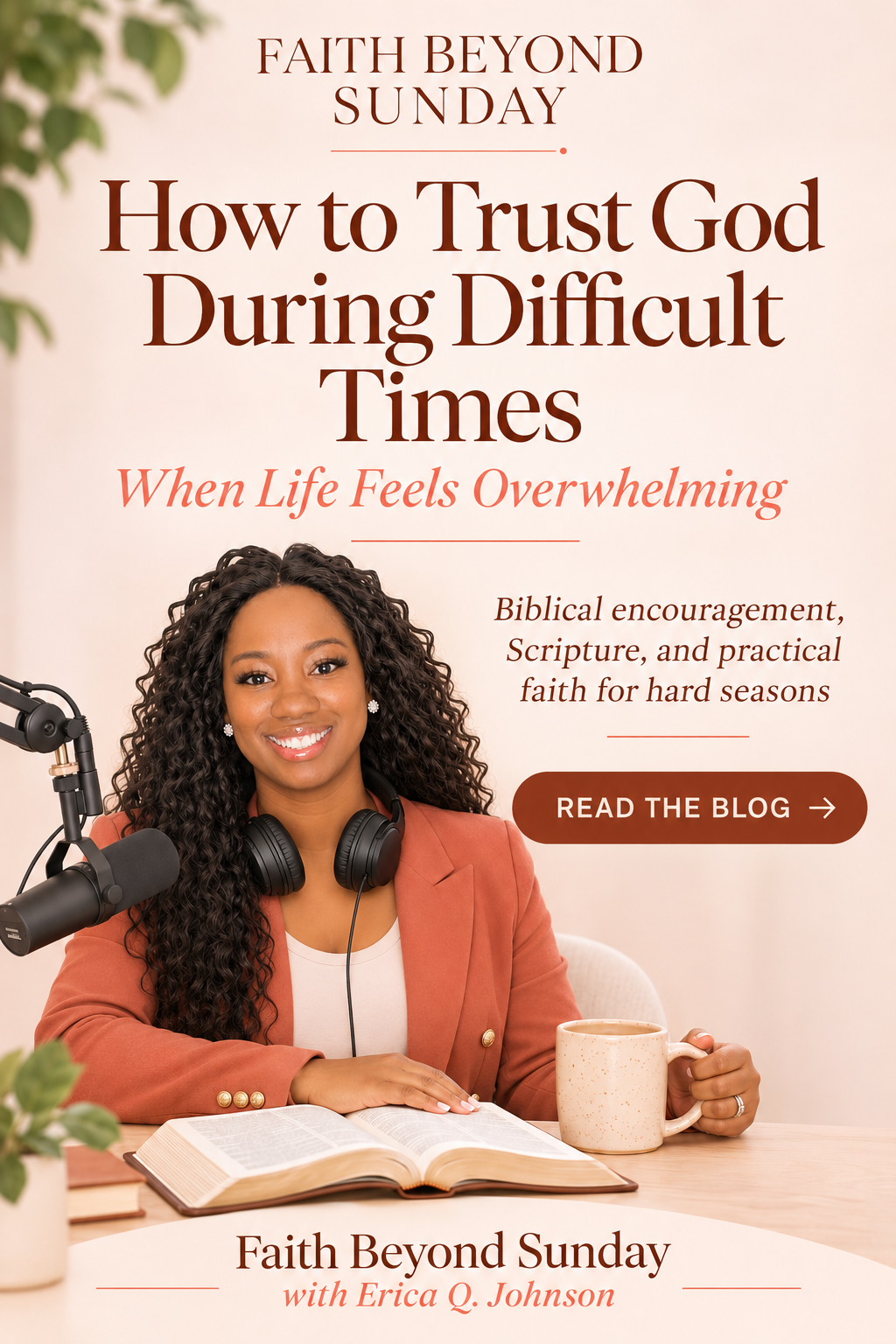
I needed something steady because my life certainly didn't feel that way.
Maybe your circumstances are completely different from mine. But I believe most of us know what it's like to face a season that feels bigger than we can handle.
Here's what I've learned: When everything around you is changing, you need to anchor yourself to what doesn't change.
And that is God.
1. Remember That Difficult Seasons Don't Last Forever
One of the things that happens when we're overwhelmed is that we begin looking at our entire lives through the lens of whatever problem we're facing.
If our marriage is struggling, everything feels uncertain.
If we're having financial difficulties, we begin worrying about what our future will look like.
If we're dealing with grief, disappointment, or an unexpected change, it's easy to start believing that life will always feel the way it does right now.
But a difficult season is not the same thing as a difficult life.
There is a difference between acknowledging what you're going through and allowing it to define you.
You can say, "This is really hard," without deciding, "This is how my life is always going to be."
Those are two very different statements.
And I want you to understand that being a Christian doesn't mean you won't experience difficult circumstances.
You can love God, have a strong prayer life, and still face situations that leave you wondering what to do next.
Your struggles don't automatically mean you've done something wrong or that God has abandoned you.
They mean you're living in a world where difficult things happen.
But those difficult things don't change who God is.
2. Anchor Yourself in God's Unchanging Character
Think about what an anchor does.
When a boat is anchored, the wind can still blow. The waves can still rise. The water doesn't suddenly become calm.
But the anchor helps keep the boat from being carried away.
That's what I want you to understand about your relationship with God.
Having faith doesn't mean the storms of life disappear. It means you know who to hold on to when they come.
Hebrews 13:8 tells us:
"Jesus Christ the same yesterday, and to day, and for ever." — Hebrews 13:8 (KJV)
Think about that for a moment.
The same God you trusted when everything was going well is still God when life becomes difficult.
His character hasn't changed because your circumstances have.
He's still good.
He's still faithful.
He's still present.
You may not know how everything is going to work out, but you can know the One you're trusting.
And sometimes that's where faith has to begin.
Instead of allowing your thoughts to remain focused on everything that could go wrong, begin reminding yourself of what God's Word says about Him.
Your circumstances may change overnight, but God's character does not change with them.
3. Spend Time Reading God's Word, Not Just Collecting Bible Verses
Now, here's something I really want us to work on.
We have to spend time actually reading our Bibles.
And I'm not talking about quickly scrolling past a Scripture on social media, liking it, and going on with our day.
There's nothing wrong with seeing an encouraging verse online. But we need more than occasional exposure to Scripture.
We need to know what God's Word says and learn how to apply it to our everyday lives.
Psalm 119:11 says:
"Thy word have I hid in mine heart, that I might not sin against thee." — Psalm 119:11 (KJV)
When you take time to read Scripture, think about what it means, and return to it throughout your week, you're doing more than memorizing words.
You're learning to recognize God's truth when your circumstances begin telling you something different.
For example, when you're feeling alone, you can remind yourself that God is present.
When you're afraid of what tomorrow may bring, you can return to what Scripture teaches about trusting Him.
And when you're overwhelmed, you can remember that you have somewhere to bring your burdens.
But we can't apply what we haven't taken the time to learn.
That's why it's so important to make Bible reading a part of our everyday lives, not something we only do on Sunday.
The goal isn't simply to finish another reading plan.
The goal is to allow God's Word to shape how we think, how we respond, and how we live.
4. Be Honest With God About What You're Going Through
Sometimes we feel like we need to have everything together before we come to God.
We think our prayers need to sound a certain way.
We try to be positive when we're actually afraid.
We tell everybody we're fine, even when we know we're not.
But you don't have to pretend with God.
Psalm 62:8 says:
"Trust in him at all times, you people. Pour out your heart before him. God is a refuge for us." — Psalm 62:8 (WEB)
I love that invitation to pour out your heart.
It means you can come to God with what you're actually feeling.
Tell Him you're tired.
Tell Him you're disappointed.
Tell Him you don't know what to do.
Tell Him about the situation that's been keeping you awake at night.
Prayer isn't a performance. It's a relationship.
And God doesn't need you to clean up your feelings before you talk to Him.
Psalm 46:1 reminds us:
"God is our refuge and strength, a very present help in trouble." — Psalm 46:1 (KJV)
Notice that Scripture doesn't say God is only present after the trouble has passed.
He's a very present help in trouble.
That means you can turn to Him while you're still waiting, hurting, or trying to figure things out.
You don't have to wait until you feel stronger to pray.
You can start right where you are.
5. Remember That God's Promises Are Bigger Than Your Present Circumstances
One of the most encouraging passages in Scripture is Jeremiah 29:11.
God spoke these words to His people during a time of exile and uncertainty.
They weren't living the lives they had expected. Their circumstances were difficult, and their future probably looked very different from what they had imagined.
Yet God had not forgotten them.
Jeremiah 29:11 says:
"For I know the thoughts that I think toward you," says Yahweh, "thoughts of peace, and not of evil, to give you hope and a future." — Jeremiah 29:11 (WEB)
Now, this doesn't mean every situation in our lives will turn out exactly how we want it to.
And it doesn't mean trusting God guarantees an easy life.
What it does remind us is that difficult circumstances don't cancel God's faithfulness.
We see another powerful example in the life of Job.
Job experienced devastating losses, yet he continued to acknowledge God even in his suffering.
In Job 1:21, he said:
"The LORD gave, and the LORD hath taken away; blessed be the name of the LORD." — Job 1:21 (KJV)
Job didn't have all the answers.
He was grieving.
He was suffering.
But he still turned toward God.
And that's something we can learn from.
Faith isn't always having the strength to say everything is going to be okay.
Sometimes faith is simply choosing to keep turning toward God when you don't understand what He's doing.
6. Put God's Word Where You Can Reach It
I want to give you something practical you can begin doing this week.
Choose three to five Scriptures that speak to whatever you're facing right now.
Maybe you need reminders about God's peace, His faithfulness, His strength, or His presence.
Write those verses down.
Put them somewhere you'll see them throughout your day.
You can place a Scripture:
On your bathroom mirror, where you'll see it while getting ready.
In your car, where you can read it before beginning your day.
At your desk, where you spend much of your working hours.
In your purse or journal, so you can return to it whenever you need encouragement.
On your phone's lock screen, where it can remind you to redirect your thoughts.
And when you begin feeling overwhelmed, stop and read the Scripture aloud.
Think about what it says.
Ask yourself what it teaches you about God.
Then consider how you can apply that truth to whatever you're facing.
For example, if you've been worrying about something you cannot control, take a moment to pray about it instead of allowing your mind to keep replaying the same fears.
If you've been carrying too many responsibilities, think about whether you need to establish a healthier boundary.
If you're discouraged, spend a few moments remembering specific ways God has been faithful to you before.
These may seem like small steps, but learning to live out our faith often begins with the choices we make during ordinary moments.
7. Look for God's Faithfulness Even in the Middle of Difficulties
I want to encourage you to pay attention to what God is doing in your life, even while you're going through something hard.
Sometimes we're so focused on the problem that we overlook everything else.
We're thinking about what hasn't worked out.
What we're still waiting for.
What we wish would change.
And I understand that because I've been there.
But what if, instead of spending the entire day focused on what is wrong, you also made room to notice what is good?
Maybe someone encouraged you when you really needed it.
Maybe you found the strength to get through a day you were dreading.
Maybe you had a moment of peace in the middle of a stressful situation.
Don't overlook those moments.
Gratitude doesn't mean pretending you're not hurting.
It means recognizing that your hardship isn't the only thing happening in your life.
You can be grateful and still be struggling.
You can have unanswered prayers and still recognize God's goodness.
And you can be walking through a difficult chapter while trusting that God hasn't finished writing your story.
What Does the Bible Say About Feeling Overwhelmed?
The Bible doesn't teach that believers will never experience hardship. Instead, Scripture repeatedly points us toward God's presence, His faithfulness, and His ability to sustain us through difficult circumstances.
Here are five passages you can return to when life feels overwhelming.
Psalm 46:1 — God is our refuge and strength in trouble.
Psalm 62:8 — We can honestly pour out our hearts to God.
Hebrews 13:8 — Jesus Christ remains the same.
Psalm 119:11 — Keeping God's Word in our hearts matters.
Jeremiah 29:11 — God spoke hope to His people during exile and uncertainty.
Don't feel like you need to memorize every verse today.
Choose one that speaks to what you're facing and spend time with it.
A Simple Prayer for When Life Feels Overwhelming
Heavenly Father,
Thank You that what I'm going through right now doesn't define my entire life.
You know the things that have been weighing on my heart. You know the questions I have, the things I'm worried about, and the situations I cannot control.
Help me remember who You are when everything around me feels uncertain.
Teach me to trust Your Word instead of allowing fear to guide my thoughts.
Give me wisdom for the decisions I need to make, strength for the responsibilities I carry, and peace as I wait on You.
Help me recognize Your faithfulness, even in the small moments of my day.
And remind me that You are still God, no matter what this season looks like.
In Jesus' name, Amen.
Frequently Asked Questions About Trusting God During Hard Times
How can I trust God when I don't understand what He's doing?
Start by remembering what Scripture teaches about God's character. You don't need to understand every circumstance before you can pray, seek wisdom, or take the next faithful step. Trust often grows as we continue turning toward God in uncertainty.
Does going through difficult times mean God is punishing me?
Not necessarily. Scripture shows that faithful people, including Job, experienced suffering. We should be careful not to assume that every hardship is punishment from God. Difficult circumstances alone do not prove that He has abandoned you.
What should I read in the Bible when I'm overwhelmed?
Start with Psalm 46, Psalm 62, and Hebrews 13. These passages can help you reflect on God's presence, His faithfulness, and the invitation to bring your worries to Him.
How can I strengthen my faith during a difficult season?
Spend consistent time in Scripture, pray honestly, practice what you're learning, and remain connected to a supportive Christian community. You don't have to make every change at once. Start with one practice you can carry into your everyday life.
What if I pray and nothing changes?
Prayer doesn't guarantee that circumstances will change immediately. But you can continue bringing your concerns to God, seeking His guidance, and taking wise steps while you wait. Trusting God doesn't mean ignoring practical responsibilities or refusing support from others.
Your Difficult Season Is Not Your Whole Story
Before you go, I want you to remember something.
You don't have to figure out your entire life today.
You don't have to know exactly how everything is going to work out.
And you certainly don't have to pretend that what you're going through is easy.
But you can choose where you place your trust.
When life shifts, anchor yourself to what doesn't move.
God's Word.
His promises.
His unchanging character.
And the next time you begin feeling overwhelmed, remind yourself:
This is a season. It is not the rest of my life.
Want to Grow Closer to God in Your Everyday Life?
If this message encouraged you, I'd love to invite you to my free five-day devotional, Who God Is When Life Shifts.
Over five days, we'll spend time reflecting on who God is, what His Word teaches us, and how we can remain anchored in Him when life feels uncertain.
Visit ericaqjohnson.com to learn more.
And remember, faith isn't just something we practice on Sunday. It's how we live every day.
With love and encouragement,
Erica Q. Johnson
Christian Life Coach | Bible Teacher | Author | Host of Faith Beyond Sunday